← All concepts
Inspire Connections and Pathways

Inspire Pathways Foundation

Equine facilitated learning for young people and adults who learn best outside a classroom.

A Tasmanian not-for-profit. Places are available by referral, through existing funding or by scholarship.

Partner with us Our programs

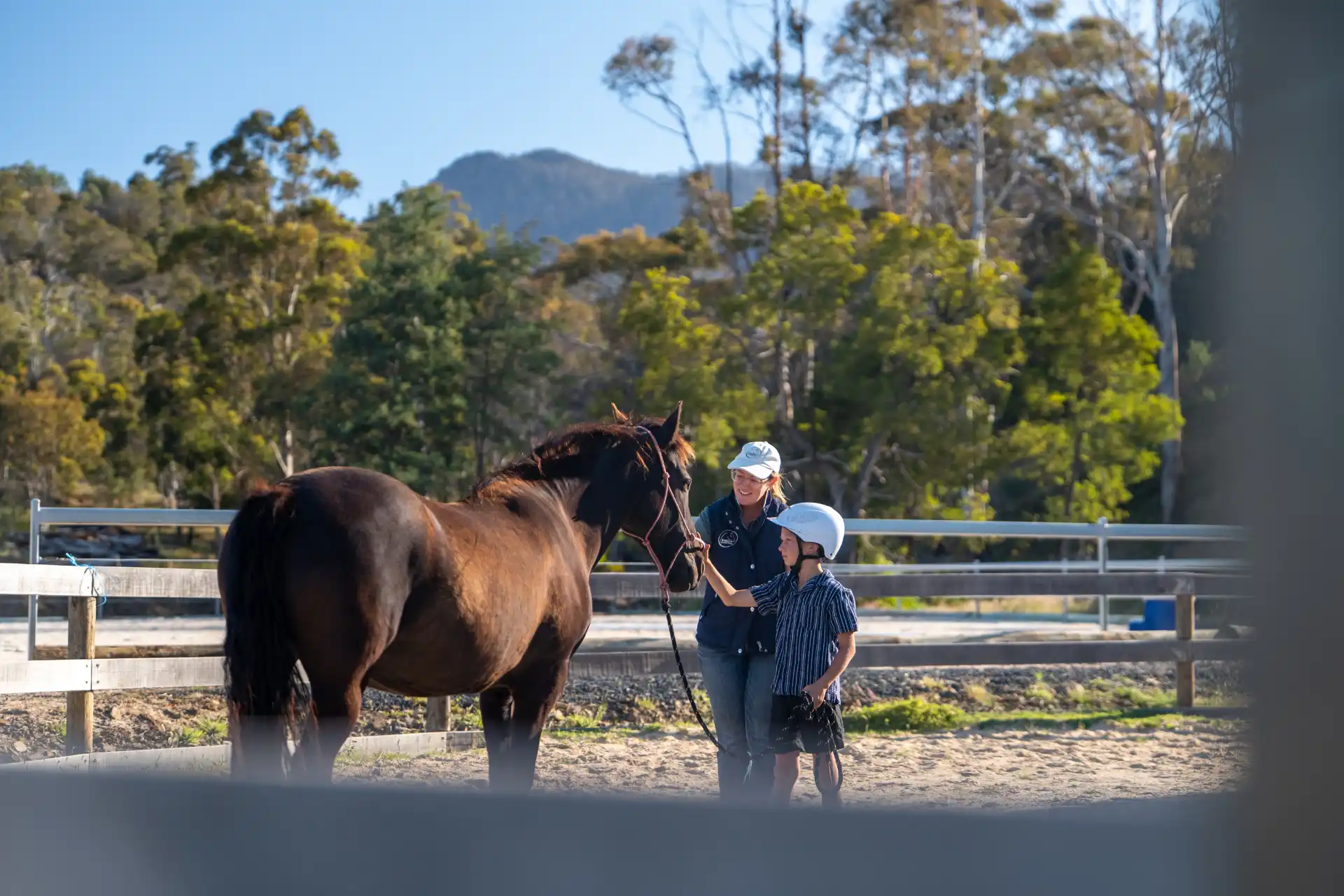
A facilitator and a young participant standing with a dark horse in the arena

How a place is arranged

  1. Referral or enquiry

    A school, youth service, allied health provider or support coordinator refers a participant, or a family gets in touch directly.

  2. Funding

    We work out how the place is paid for: a grant, an NDIS plan, or a school or agency budget, depending on the program.

  3. Scholarship if needed

    If no funding is available, the Foundation subsidises the place in full or in part.

Who we are

Inspire Pathways Foundation is an equine facilitated learning organisation based in Tasmania. We support children, young people and adults to learn and grow alongside horses, within a structured and supportive program.

Sessions are facilitated, held outdoors and paced to the participant. They are neither clinical appointments nor riding lessons.

The Foundation is the not-for-profit arm of an established Tasmanian practice. It was set up to fund and deliver places for people who would otherwise miss out.

Our programs

Four priority programs for year one. Each one sets out who it is for, how to access it and how a place is paid for.

First Nations programs

Equine facilitated learning developed with and for Aboriginal communities in Tasmania. Program design, cultural governance and pace are worked out together with community partners.

Who it serves
Aboriginal children, young people and families in Tasmania.
How it is accessed
Through partnering Aboriginal community-controlled organisations.
Funding pathway
Grant funded. Aligned with Closing the Gap priorities and suited to NIAA and state government program funding.
At-risk youth programs

Structured programs for young people disengaged from school or at risk of becoming so, including young people connected with youth justice or out-of-home care. Delivered in blocks of sessions so progress can build over time.

Who it serves
Young people referred by an adult already working with them. age range to confirm
How it is accessed
Referral from a school, youth service, case worker or support organisation.
Funding pathway
Grant and philanthropic funding. Some places purchased directly from school or agency budgets.

Wellbeing programs

Programs supporting emotional regulation, confidence and mental wellbeing for children, young people and adults, including participants with disability and participants recovering from a period of significant disruption.

Who it serves
Children, young people and adults, including NDIS participants.
How it is accessed
Self-referral, or referral from an allied health provider or support coordinator.
Funding pathway
NDIS-funded places are delivered through Inspire Connections EFL Pty Ltd. The Foundation funds places for people without a plan.

Subsidised community places

Fully or partly subsidised places held across each of the programs above, for individuals and families who cannot meet the cost of a place and have no other funding available to them.

Who it serves
Individuals and families facing financial barriers to a place.
How it is accessed
Referral or direct enquiry, followed by a short needs conversation.
Funding pathway
Philanthropic trusts, community grants and donations held by the Foundation.

Our mission

To support wellbeing and create the conditions for learning, by cultivating safety, grounding and belonging.

When a person feels seen, accepted and capable, they are free to grow.

In practice, that belief shapes how a session opens, how quickly it moves, when a horse is introduced, and what a participant is and isn't asked to do.

It is also why wellbeing comes first in every program. Until a person feels safe, very little else is possible.

What makes this different

Six things set our work apart from general wellbeing services.

Nature-based and embodied learning

Learning happens outdoors and through the body (movement, breathing, attention, being close to a large animal) as well as through conversation. For participants who have learned to manage adults with words, or who don't have the words yet, this can be the difference between taking part and shutting down.

Horses as co-facilitators

The horses are partners in the work, and their welfare, workload and willingness are taken as seriously as a participant's. If a horse isn't willing on a given day, it doesn't work that day.

A rigorous safety framework

Physical, psychological and ethical safeguards are written down in advance, applied in every session and reviewed regularly. Safety is built into how each session is planned and run.

Meeting people where they are

Nobody needs a certain level of confidence, ability or communication before they start. Each session begins where the participant is that day, including the days when things have gone backwards, and moves at their pace.

Bridging wellbeing and learning

We don't separate wellbeing from learning. Feeling settled, confident and that you belong is what makes learning possible, so we work on those things first.

Built for young people who have not found their place

Much of our work is with young people for whom school and other traditional settings haven't worked. The program was designed with them in mind from the start.

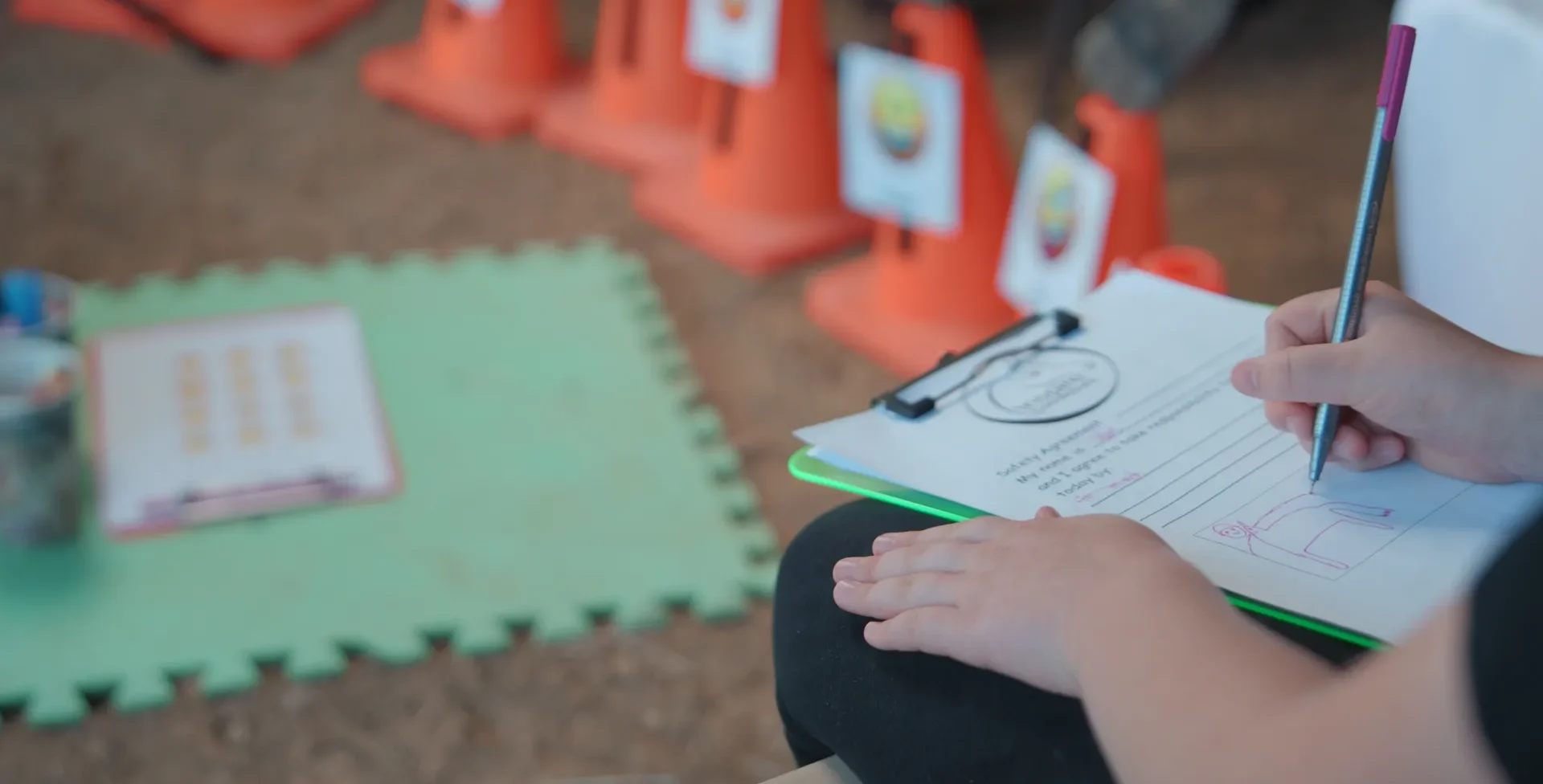
A participant's hands filling in a worksheet on a clipboard during a session

Safety framework

Working with horses carries real physical risk, and many of the people we work with are dealing with more than they can easily talk about. Our framework covers both, and it protects participants and horses equally.

The framework is documented, applied in every session and reviewed on a set schedule, with each review recorded. Funders and referring organisations can request a copy of the full framework and its latest review.

Physical

Documented handling protocols. Horses matched to the participant and to the day. Session ratios, ground rules, protective equipment, and site condition checks before every session.

Incidents and near misses are recorded and reviewed, and practice changes as a result.

Psychological

Consent at every stage, including the right to stop, step back or say nothing without explaining why. Trauma-informed facilitation and clear boundaries around disclosure.

Clear referral pathways if something comes up that is outside our scope. Participants are never asked to perform, disclose or explain themselves.

Ethical

Horse welfare limits on workload, session frequency and recovery, and close attention to whether each horse is willing to take part.

Child safe practices and screening, privacy and data handling, and a written scope of practice so everyone knows its limits in advance.

Structure and governance

Inspire Connections operates through two entities, each with its own purpose and separate finances.

Not-for-profit arm

Inspire Pathways Foundation

  • Company limited by guarantee
  • Registered with ASIC and the ACNC
  • Deductible gift recipient status being pursued
  • Holds charitable purpose, grants and donations

Commercial arm

Inspire Connections EFL Pty Ltd

  • Established Tasmanian EFL practice
  • NDIS sessions and corporate wellbeing
  • Schools programs and practitioner training
  • Holds the methodology and licensing IP

Grant funds are acquitted against the Foundation's programs, and the arrangement between the entities is set out in a written service agreement. Commercial income stays with the company, and charitable income stays with the Foundation and is spent on the programs it was granted for.

To confirm before launch: board composition and director backgrounds, conflict of interest and related party policy, and the financial year and reporting cycle.

Scope and growth

Based in Tasmania, delivering statewide within the first year, with a plan to grow beyond that.

  1. Now

    Delivering in Tasmania from an established practice, with the Foundation newly registered and its first programs being funded.

  2. Year one

    Statewide delivery, so a family's distance from a single site doesn't limit who can be referred, with all four priority programs running.

  3. Beyond

    Licensing the methodology to other qualified EFL practitioners, with the safety framework and training included.

Get involved

There are four ways to work with the Foundation. Each one starts with the form below or a direct email.

Partner

For community organisations, schools and services who want to shape or co-deliver a program with us.

Refer

For schools, youth services, allied health providers and support coordinators referring a participant.

Fund

For grant makers, trusts and foundations. Governance documents, program outlines and the safety framework are available on request.

Enquire

For individuals and families, including enquiries about subsidised and scholarship places.

Send an enquiry