← All concepts
Review notes
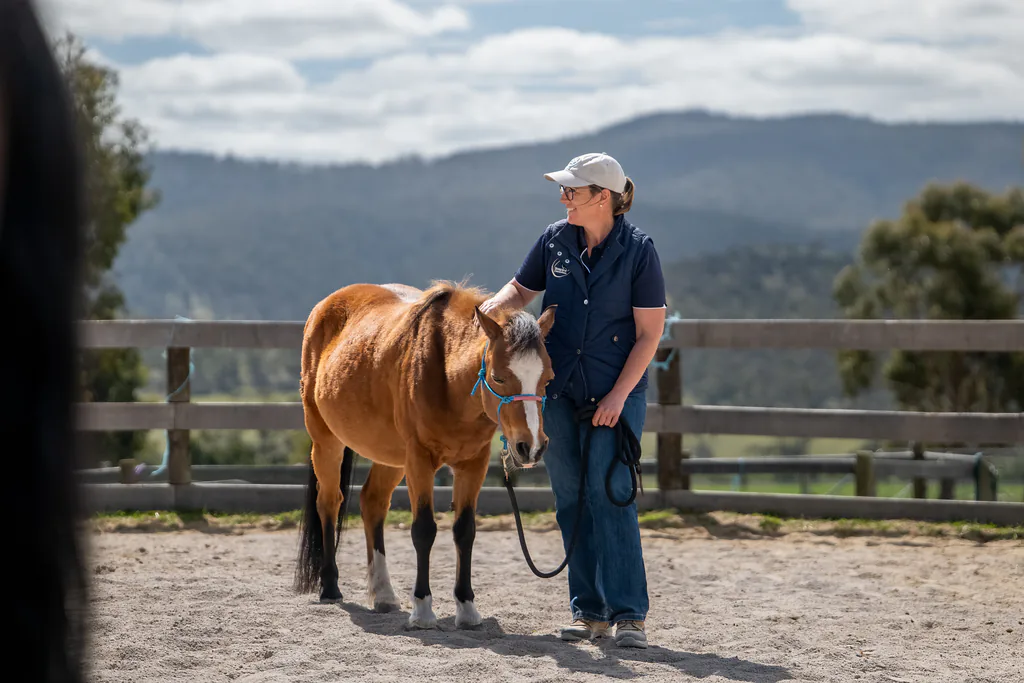
A facilitator standing with a bay pony in the arena, with forested hills behind

Inspire Connections & Pathways for Learning

Learning and wellbeing alongside horses, in the Tasmanian landscape.

Refer or enquire Read the research PDF

What can we do when the classroom isn't working?

We offer another way in: learning outdoors, alongside horses, at a pace set by the young person.

  • Children and young people aged 6 to 18

    Experiencing disability, trauma, anxiety or disengagement from school.

  • No cost, or reduced cost

    For families without an NDIS plan or other funding. Places are funded by grants and donations.

  • By referral or direct contact

    Schools, services and support workers can refer. Parents and carers can get in touch directly.

Who we are

A Southern Tasmanian not-for-profit using equine facilitated learning to help children and young people feel safe, settled and ready to learn.

This is an educational approach, not therapy or riding lessons. Sessions are trauma-informed, held outdoors and paced to each participant's goals.

Programs run from a rural property in Broadmarsh, with referrals welcome from the Southern Midlands, Brighton, the Derwent Valley, greater Hobart and beyond.

Led by a registered teacher

  • Bachelor of Education, University of Tasmania
  • Specialist training in literacy intervention
  • Certified EFL practitioner, Groundwork Therapy
  • Trained in Eagala and Horse Powered Reading®
  • Member, Animal Therapies Ltd and Outdoor Health Australia
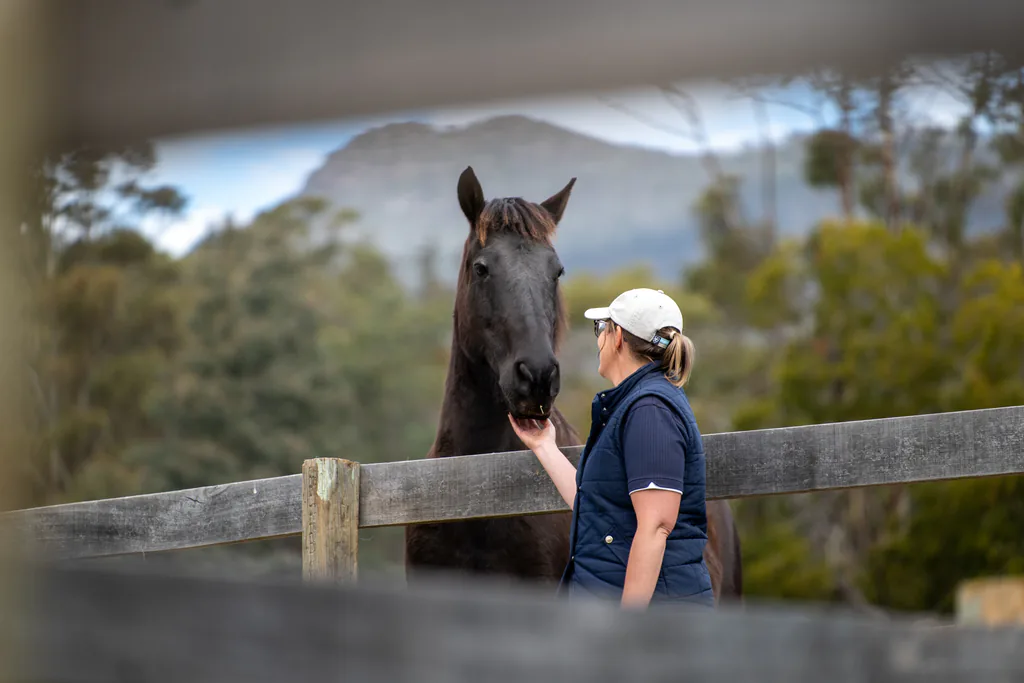
A facilitator, seen from behind, resting a hand under a dark horse's muzzle at the paddock fence, with a mountain behind
Each session starts from where the participant is on the day.

Our mission

To support wellbeing and create the conditions for learning, by cultivating safety, grounding and belonging.

When a person feels seen, accepted and capable, learning becomes possible.

Current programs

Every program follows the same six-stage pathway, at the participant's pace.

  1. Safety
  2. Regulation
  3. Awareness
  4. Connection
  5. Agency
  6. Confidence
Based on Lang (2025), Learning With Horses evaluation, University of Tasmania.

Learning With Horses

Individual or small-group sessions for children and young people facing challenges such as disability, trauma or anxiety.

Who it's for
Ages 6 to 18, without NDIS or other funding
How it works
10 weekly sessions, starting with a meet-and-greet
Cost to families
None, or reduced

Ground Skills

A small-group program for secondary students building real-world skills: reading body language, staying calm, communicating clearly and working as a team. Aligned with the Personal and Social Capability in the Australian Curriculum.

Who it's for
Secondary students disengaging from school
How it's accessed
School referral, in small groups
How it's funded
Grants, with some school contribution

Hoofprints: Step by Step Pilot

A 10-week literacy and confidence program for early primary children, bringing structured, evidence-based reading instruction outdoors alongside horses.

Who it's for
Early primary children who need extra reading support
How it works
Assessed at the start, with progress tracked throughout

Project Connect

A 12-week program for young people at risk of contact with the youth justice system, linked to follow-on support in their community.

Who it's for
Young people referred by a school, youth service or case worker
How it's accessed
Referral
How it's funded
Seeking grant funding update when funded

What makes us different

Nature-based, embodied learning

We learn by doing, being and feeling, not only listening. Movement, sensory experience and time outdoors support attention and regulation.

Horses as partners

There is no riding. The herd's safety and wellbeing are prioritised alongside the participants'.

A safety-aware approach

Clear risk management guides physical, psychological and ethical practice in every session.

Meeting people where they are

Each session starts where the young person is on the day, honouring their choices and building trust step by step.

Wellbeing and learning together

We build regulation, trust and connection first, then extend into communication, problem-solving and literacy.

For young people who need a different approach

Designed for young people who find that school doesn't suit the way they learn, connect or engage.

What the research found

In 2025 the University of Tasmania's Peter Underwood Centre evaluated our Learning With Horses program with 16 children from three regional schools.

Summary report PDF Full report

  • Calmer and happier

    Children who arrived upset settled quickly once they were with the horses.

  • Confidence grew

    Children moved at their own pace from watching to brushing and leading.

  • Behaviour changed

    School staff noticed a clear contrast with how children were in the classroom.

  • Children kept coming

    Most attended every session, and remembered the horses by name months later.

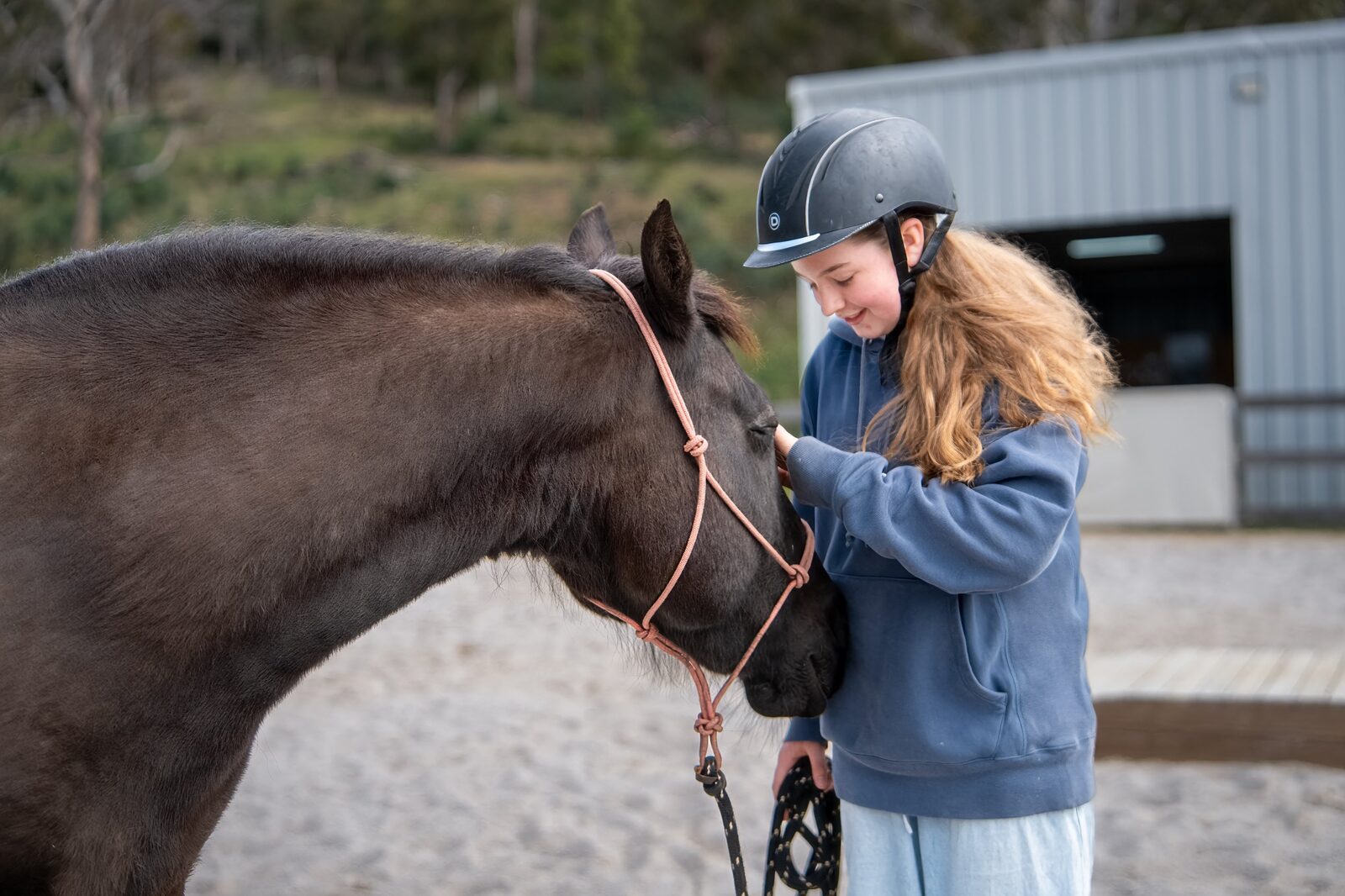
A girl in a riding helmet smiling as she rests her hand on a dark pony's face

“If I'm kind to the horse I get kind things back, like love.”

Child participant

“When you see [him] cleaning the hooves or brushing the horses or leading them, compared to everyday [him], it's like a new child.”

School staff member

Quotes from Lang, M. (2025), Learning With Horses: An Evaluation of Equine-Facilitated Learning with Inspire Connections, University of Tasmania. The evaluation was led by Dr Megan Lang, who has since joined our board, and part-funded by Communities for Children.

A safety-aware approach

Funders and referrers can ask for a copy of our full safety framework.

Physical safety

Horses trained for the work. Adult-child ratios, protective equipment and site checks.

Emotional safety

Consent at every step, including the right to stop or take a break. Trauma-informed practice.

Child safety

Tasmanian Child and Youth Safe Standards. Everyone holds a Working with Vulnerable People registration.

Horse welfare

Tasmanian equine welfare guidelines and the Five Domains Model.

Structure and governance

Two separate organisations, with separate finances.

The charity

Inspire Connections & Pathways for Learning Ltd

  • Company limited by guarantee
  • ACNC registration pending
  • Funds places for young people with no other support
  • Holds grants and donations

The company

Inspire Connections Pty Ltd

  • Established Tasmanian practice, founded 2017
  • Registered NDIS provider
  • Delivers NDIS-funded and paid services

Arrangements between the two are approved by directors with no conflict of interest. Governance documents, policies and annual reports are available on request.

Our board

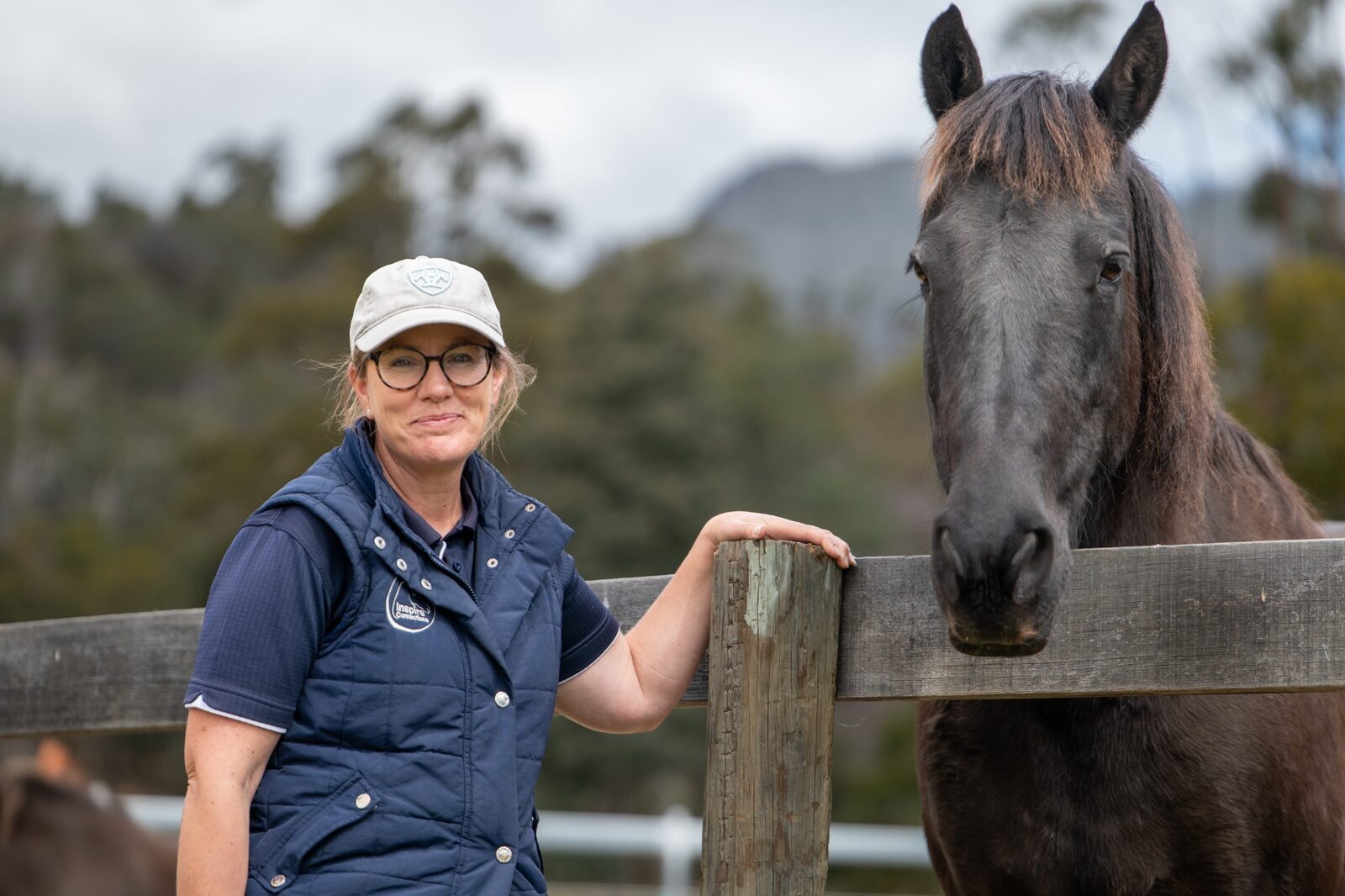
  • Karina Harback standing at a paddock fence beside a dark horse

    Karina Harback

    Founder and CEO

    A registered teacher who founded Inspire Connections in 2017, looking for other ways to support students who were struggling in the classroom.

  • Photo to come

    Dr Megan Lang

    role to confirm

    Researcher with the University of Tasmania who led the 2025 evaluation of Learning With Horses. blurb to confirm

  • Photo to come

    Matthew Turner

    role to confirm

    Short background to come

  • Photo to come

    Zelinda Sherlock

    role to confirm

    Short background to come

Questions you may have

Is this therapy?

No. Our programs are led by a registered teacher and work within an educational scope of practice. Young people often feel calmer and more confident, but this is not counselling or psychology.

Do participants ride the horses?

No. Participants observe, brush, walk alongside and spend time with the horses, always closely supervised.

Who pays for a place?

The charity funds places in full or in part through grants and donations. Some schools contribute to group programs. Young people with an NDIS plan are referred to Inspire Connections Pty Ltd.

Who can refer a young person?

Schools, youth and family services, health professionals, support workers and case workers. Parents and carers can also contact us directly.

How are young people kept safe?

Helmets around the horses, an adult close to every horse, and a safety agreement participants help write. Our full safety framework is available on request.

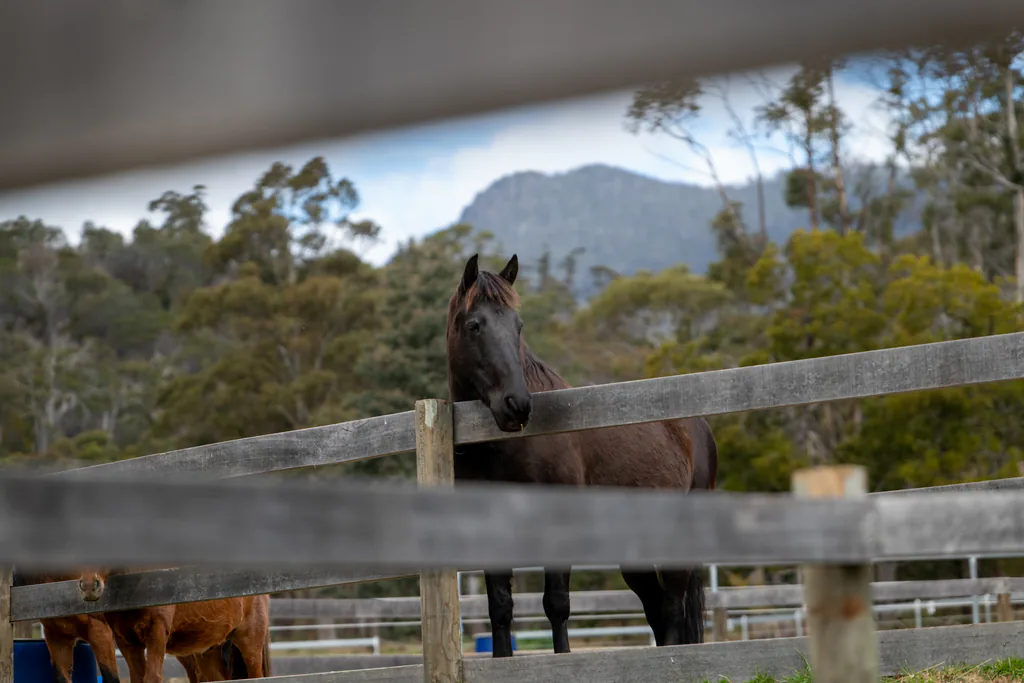
A dark horse looking over a paddock fence, with bushland and a mountain behind
Delivered in southern Tasmania, with the longer-term goal of reaching young people across the state.

Get involved

Each of these starts with the form below or a direct email.

Refer

Schools, services and support workers referring a young person, or families getting in touch.

Partner

Schools and organisations who want to host a group or co-deliver a program.

Fund

Grant makers, trusts and foundations. Governance documents and program outlines are available on request.

Volunteer

Help with the horses and support young people in sessions. Horse experience is helpful, along with patience and calm. A Working with Vulnerable People registration is required.

Send an enquiry